
Frame Rails That Haul the Load.
Rectangular main rails, square crossmembers and tongue tube for utility, equipment and livestock trailers.
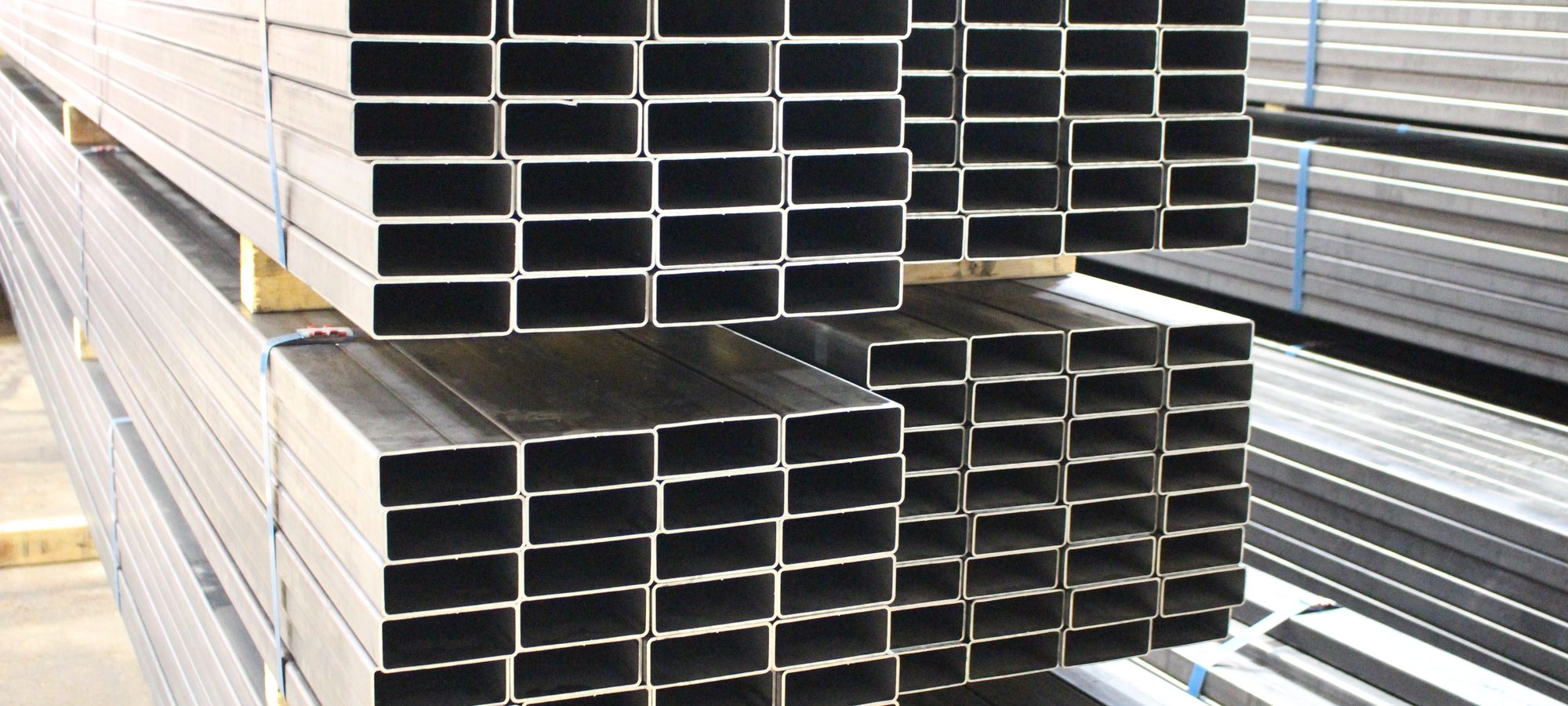
One main rail, no splice.
Mill lengths run to 48 feet, so a long rail comes from one piece.
What Our Tube Becomes.
Trailer builders buy a handful of sizes in large volume and cut every rail and crossmember from them. Rectangular tube stands on its tall side to carry the load, and square crossmembers weld flat to it with no coping.
- Main frame rails
- Crossmembers
- A-frame tongues
- Ramps and ramp frames
- Side rails and stake pockets
- Truck body subframes
A Typical Order.
- Size
- 4 x 2
- Wall
- .188 (3/16 in)
- Spec
- A500 Grade C
- Finish
- Hot rolled, painted after welding
- Length
- 24 ft, cut to rail length
- Volume
- Monthly truckloads
Common Sizes for Trailer Frames.
These are typical choices for each part of a trailer frame. Your engineer sets the size and wall for the load, the axle spacing and the deck length. Every size here is on our standard list.
Main Rails
Rectangular tube set on its tall side, where it is stiffest in bending.
Walls .120 to .188. A500 Grade C.
Crossmembers
Square or small rectangular tube welded flat between the rails.
Walls .095 to .188. A500 Grade C.
Tongues and Ramps
Square tube for A-frame tongues, lighter square and rectangle for ramp frames.
Walls .120 to .188. A500 Grade C.
Finish: hot rolled for frames that are painted after welding, galvanized for frames that are not. See Finishes and Specs.
Why Trailer Builders Buy Tube From a Mill.
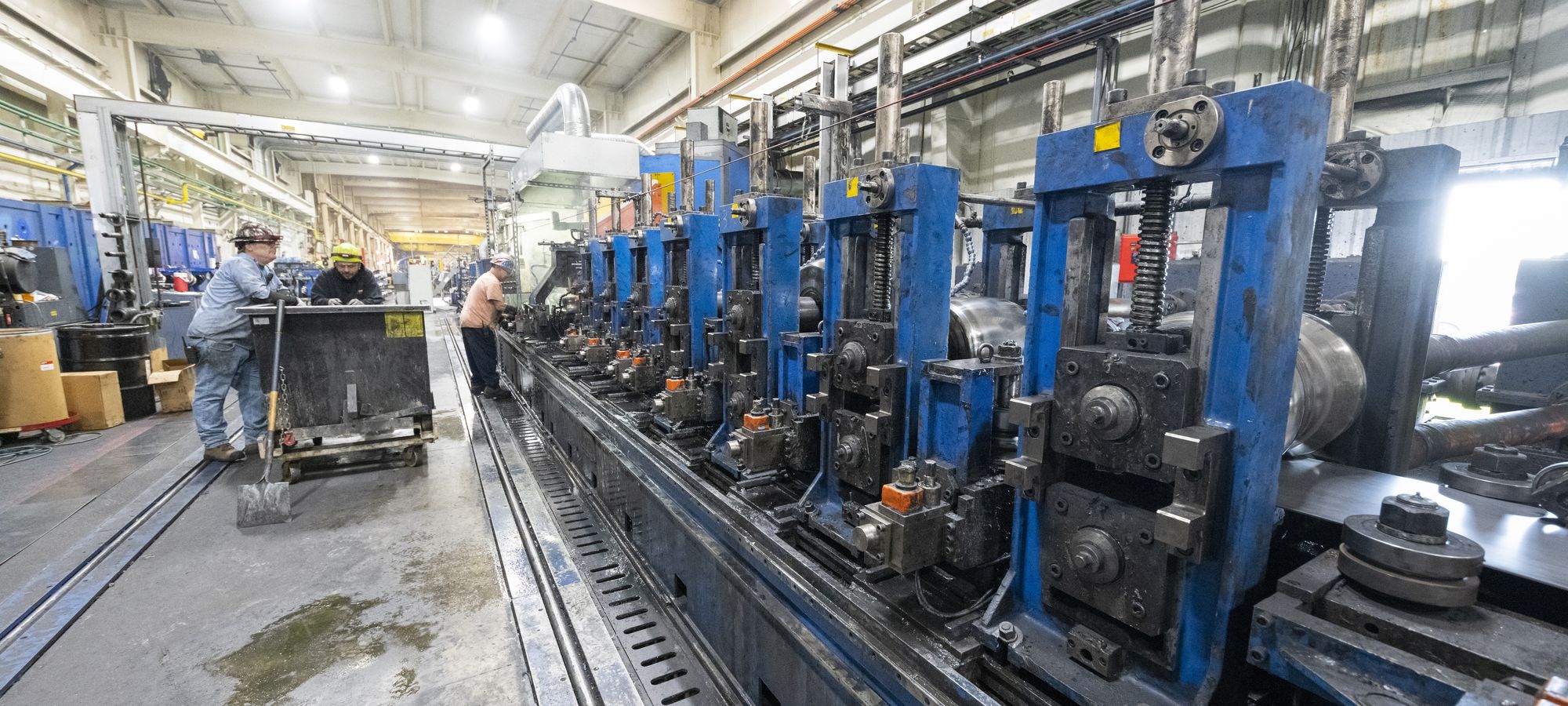
Buying from the ERW mill that makes the tube is about length, count and fewer handling steps between the coil and your jig.
Lengths Up to 48 Feet
Mill lengths run from 20 to 48 feet, so a long main rail comes from one piece with no splice. The cut-length calculator shows the drop for each length.
Cut to Your Length
Rails and crossmembers can be cut to the length you build with, so they go to the welding jig without a trip through your saw.
Known Bundle Counts
A standard bundle of 4 x 2 x .188 holds 35 pieces at 20 or 24 feet and 20 at 40 feet. The bundle planner shows the weight of each bundle before it arrives.
Related.
Capabilities and Tools
Questions.
Building a new trailer line? Send us the bill of material and we will quote every tube on it.
What tube is used for trailer frames?
Rectangular tube such as 4 x 2 and 6 x 2 for main rails, square tube such as 2 x 2 and 3 x 3 for crossmembers, and 2-1/2 or 3 inch square for tongues are common. Your engineer sets the size and wall for the load.
A500 or A513 for trailers?
A500 is the usual choice for frames because it carries a minimum yield strength. A513 suits parts where tight outside tolerances matter more than strength.
Can you cut rails and crossmembers to length?
Yes. Cut-to-length tube arrives ready to fit, with no drop at your plant.
What size tube for a trailer tongue?
Square tube such as 2-1/2 x 2-1/2, 3 x 3 or 4 x 4 in heavier walls such as .188 is common for A-frame tongues. The coupler rating and your engineer set the final size.
How many pieces are in a bundle of 4 x 2 tube?
A standard bundle of 4 x 2 x .188 holds 35 pieces at 20 or 24 feet and 20 pieces at 40 feet. The bundle planner gives counts and weights for every size and wall.
What do I need to send for a quote?
A trailer bill of material usually has everything we need. Beyond that: size and wall, spec and finish, length, quantity, delivery and paperwork. The quote form asks for each one.
Tell Us the Size,
Wall and Footage.
One size or a whole program, in mill lengths or cut to your length. The quote form takes about two minutes.